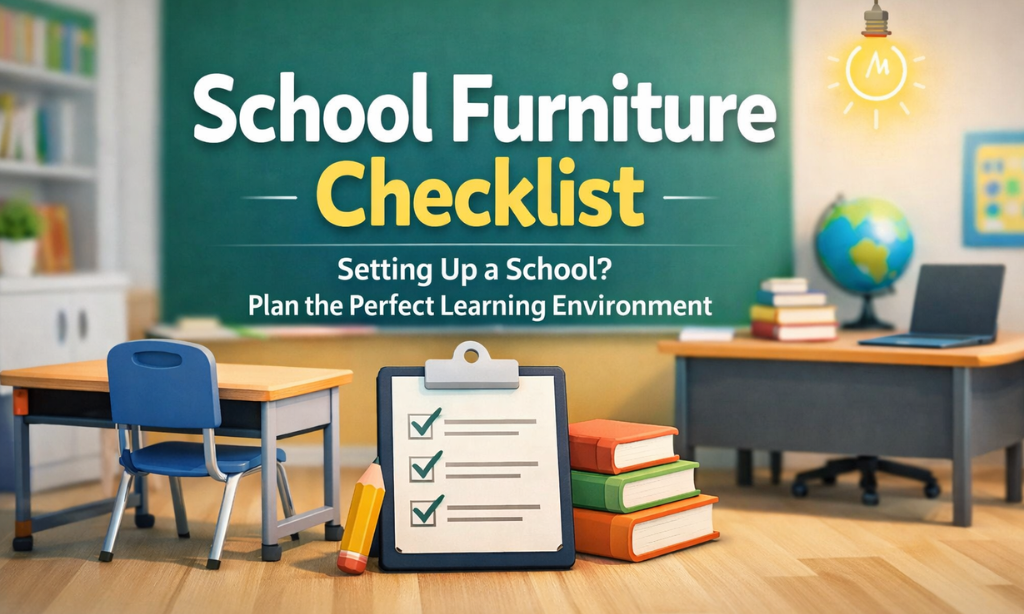
Starting a new school is not just about classrooms and books. It is about creating an environment where students feel comfortable, safe, and inspired to learn every single day. One of the biggest parts of this process is selecting the right school furniture. The furniture you choose will directly impact student posture, classroom discipline, learning outcomes, and even your school’s overall brand image.
If you are setting up a new school, this complete checklist of school furniture will help you plan every space properly, from classrooms to laboratories, offices, and outdoor areas, without missing anything important.
Why Choosing the Right School Furniture Matters
Many new schools focus heavily on infrastructure and curriculum, but leave furniture decisions for the last stage. This often leads to rushed purchases, poor-quality materials, and mismatched classroom setups.
Well-planned school furniture:
- Supports healthy posture and reduces fatigue
- Improves classroom organization
- Encourages collaborative learning
- Enhances the look and feel of the school
- Reduces long-term maintenance costs
When furniture is chosen thoughtfully, it becomes an investment rather than an expense. Now we will talk about complete checklist of school furniture for new schools.
Classroom Furniture Checklist
Classrooms are the heart of every school. The furniture here must be durable, comfortable, and suitable for the age group.
1. Student Desks
Choose desks based on classroom layout and teaching style.
Options include individual desks, dual desks, modular desks for group learning, or height-adjustable desks for growing students. For primary classes, slightly curved or colorful desks work well. For senior classes, more structured and minimal designs are preferred.
The desk surface should be scratch-resistant, easy to clean, and strong enough for daily use.
2. Student Chairs
Chairs must support the natural curve of the spine. Poorly designed chairs can cause back and neck strain, especially during long school hours.
Look for:
- Ergonomic design
- Proper seat height according to age
- Lightweight yet sturdy structure
- Anti-slip legs
Stackable chairs are useful for multi-purpose classrooms.
3. Teacher’s Desk and Chair
A well-designed teacher’s workstation improves classroom management.
Include:
- A spacious desk with drawers
- A comfortable ergonomic chair
- A small storage cabinet for books and records
4. Classroom Storage
Every classroom needs organized storage space. Add bookshelves, cupboards, cubbies for younger classes, and lockers for senior students. Organized classrooms look cleaner and reduce distractions.
5. Boards and Display Units
Whiteboards, pin boards, and smart boards are essential. You can also include display panels for student projects to create a more engaging environment.
Administrative Office Furniture
The administrative block creates the first impression of your school.
1. Principal’s Office
- Executive desk
- Comfortable office chair
- Visitor chairs
- Filing cabinets
- Small meeting table
2. Reception Area
- Reception counter
- Waiting area chairs or sofa
- Visitor log desk
- Storage for documents
A neat and professional reception area builds trust among parents.
3. Staff Room
Teachers need a comfortable space to prepare lessons and relax.
Include:
- Work desks
- Comfortable chairs
- Personal lockers
- Discussion table
- Pantry storage
Important Things to Check Before Buying School Furniture
Before placing bulk orders, always:
1. Measure Room Sizes Properly
Before purchasing school furniture in bulk, carefully measure classroom dimensions, door widths, and walking space. Proper space planning prevents overcrowding, improves student movement, and ensures desks and chairs fit comfortably. Accurate measurements help create a well-organized and safe learning environment.
2. Confirm Warranty and Durability Standards
Always check the warranty period and durability standards before buying school furniture. Strong frames, long-term guarantees, and certified testing indicate quality. Durable school desks and chairs reduce maintenance costs and ensure long-lasting performance in high-traffic classrooms.
3. Check Material Quality
The quality of materials directly affects furniture’s lifespan. Look for scratch-resistant surfaces, powder-coated metal frames, and high-grade engineered wood. Premium materials improve strength, safety, and appearance while reducing repair and replacement expenses over time.
4. Ensure Safety Certifications
School furniture must meet safety and compliance standards. Verify certifications related to stability, fire resistance, and child safety. Certified furniture reduces accident risks and provides peace of mind to school management and parents.
5. Consider Future Expansion Needs
Choose modular and flexible school furniture that can adapt to future growth. As student strength increases or classrooms expand, scalable furniture solutions save money and prevent frequent replacements. Planning ahead supports long-term school development.
Also Read:
- School Furniture Guide for Primary and Secondary Classrooms
- How to Choose the Right School Desk and Chair for Students
Final Words: Checklist of School Furniture
Setting up a new school is a long-term vision, and furniture plays a major role in shaping that vision. The right school furniture creates comfort, improves concentration, and supports better learning outcomes.
When you follow a complete checklist and plan carefully, you build more than just classrooms; you create a structured and inspiring learning environment.
If you are planning to launch a new school, use this guide as your foundation and choose furniture that reflects quality, safety, and long-term value.