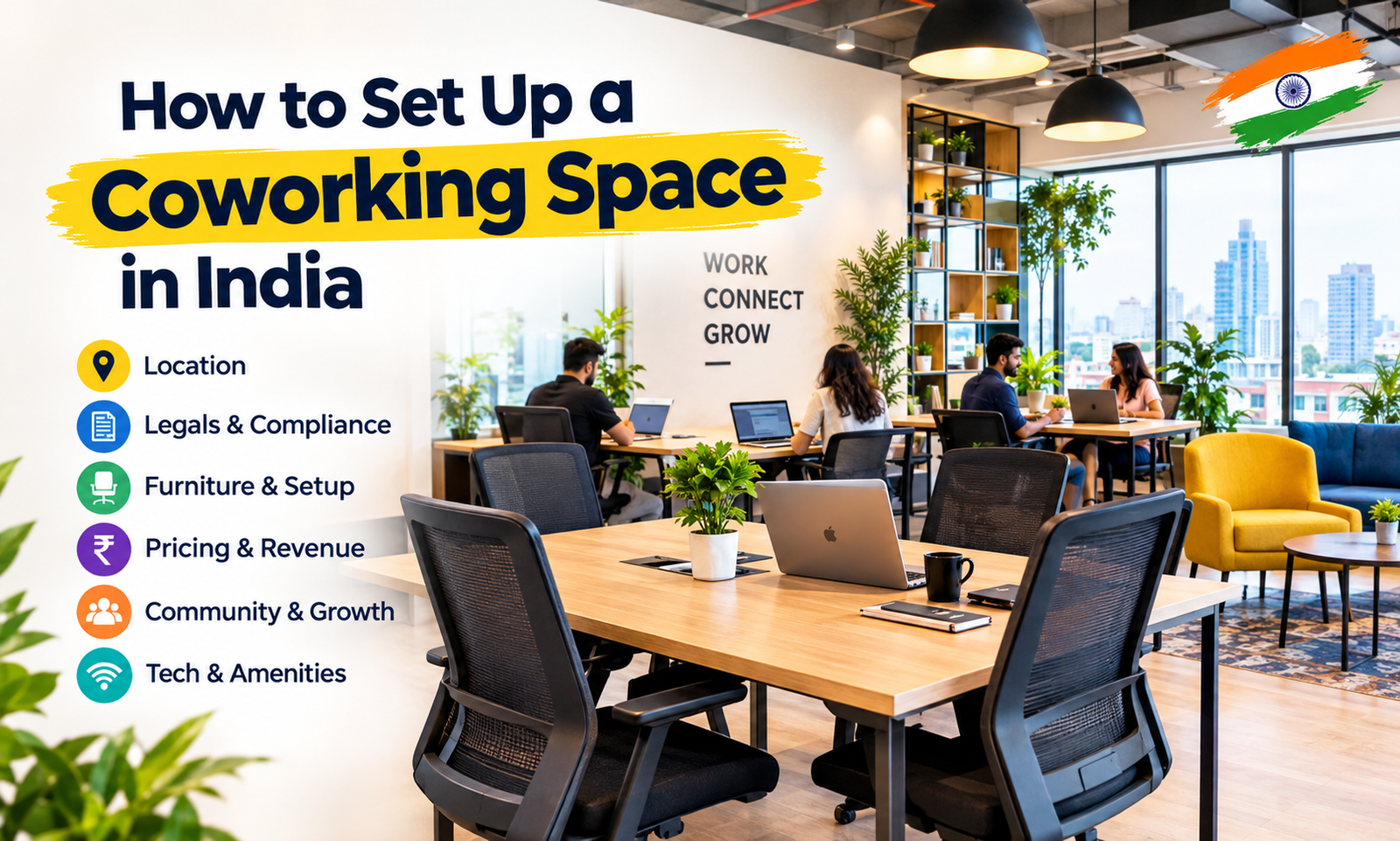
Wondering how to set up a coworking space in India? You’re in the right place at the right time. Coworking spaces are booming across the country, from Bengaluru to Delhi NCR, freelancers, remote workers, and small startups are ditching expensive office leases for flexible shared workspaces.
This guide covers everything from location and legals to furniture and pricing so you can set it up properly from day one.
How to Set Up a Coworking Space in India
Here is the complete guide for setting up coworking space in India:
1. Write a Business Plan (A Real One, Not a Template)
Most people skip this or do a half-hearted version. Don’t. The coworking business looks simple from the outside but it’s a hospitality business with real estate costs a brutal combo if you get the numbers wrong.
Before you sign a lease or buy a single chair, sit down and honestly answer these:
- Who is your target audience? (Freelancers, remote workers, startups, corporate teams?)
- What type of space are you offering? (Hot desks, dedicated desks, private cabins, meeting rooms?)
- What is your budget — for setup and for monthly operations?
- How many members do you need to break even?
The spaces that fail in India usually fail not because of bad design or bad location, they fail because someone underestimated how long it takes to fill seats. Budget for at least 6 months of low occupancy. If you fill up faster, great. If you don’t, you won’t panic.
2. Location Is Everything — Don’t Rush This Part
I’ve seen good coworking spaces die because they picked the wrong spot. Not the wrong city, the wrong street. In India, where people are deeply commute-averse (and rightfully so), location matters more than almost anything else.
Here’s what the best-performing spaces in India tend to have in common:
- Proximity to metro stations or major roads; an easy commute matters a lot
- Business districts or startup hubs, areas like Cyber City (Gurgaon), Koramangala (Bengaluru), or BKC (Mumbai) attract the right crowd
- Ground or lower floors offer easier access and better visibility
- Parking and food options nearby your members will thank you
3. Layout: The Mistake Most First-Timers Make
Here’s the classic first-timer mistake: they pack in as many desks as physically possible to maximise revenue per square foot. Then members feel cramped, leave after a month, and the space never builds any real community.
Spaces that retain members long-term build breathing room into the layout. A well-designed coworking space in India has:
- Open hot desk area: high-density seating for flexible members
- Dedicated desk zone: slightly more personal, semi-permanent spots
- Private cabins or pods: for startups and teams that need privacy
- Meeting and conference rooms: bookable by the hour
- Lounge and breakout area: for informal chats and quick calls
- Pantry and café zone: a good coffee setup goes a long way
Here’s a practical tip: don’t fix everything permanently in month one. Use modular furniture where you can. Your membership mix will surprise you; maybe you thought you’d be full of freelancers, but you end up with three startups of 8 people each. You want to be able to adapt without a full renovation.
4. Furniture: Where You Absolutely Cannot Cut Corners
Members notice bad furniture faster than almost anything else. They won’t always tell you; they’ll just quietly not renew. Think about it from their side: they’re paying ₹8,000–₹15,000 a month for a desk. If their back hurts by noon and the chair wobbles, they’ll start looking elsewhere by month two.
Here’s where to put your money:
- Ergonomic office chairs are non-negotiable. Your members are sitting for 6–10 hours a day. Invest in mesh or high-back ergonomic chairs with lumbar support. Brands that offer ergonomic chairs in India, like Ergohuman or similar imported ranges, are worth considering for premium zones.
- Height-adjustable tables are increasingly popular and signal a premium, health-conscious space. Even having a few sit-stand desks sets you apart from basic coworking setups.
- Lounge and breakout furniture — lounge chairs, poufs, low coffee tables — create a relaxed zone that members genuinely use and appreciate.
- Meeting room furniture — a solid conference table, comfortable meeting chairs, and a clean acoustic environment make your meeting rooms worth booking.
- Café-style seating — high bar stools and café tables in the pantry or café zone add personality and function.
One practical note on buying: go to a specialist furniture supplier, not a general home furnishing store. Suppliers who work with commercial and office furniture understand load requirements, warranties for heavy daily use, and they’ll often let you mix and match finishes so your space has a consistent look. Buying in bulk also unlocks significantly better pricing, don’t buy 40 chairs one at a time.
5. Pricing: Don’t Undercharge Yourself Into the Ground
New coworking operators in India almost always underprice out of fear. They think cheap seats will fill the space fast. What actually happens is they attract price-sensitive members with no loyalty, struggle to cover costs, and can never invest in improvements. Price for the value you’re delivering.
One of the best things you can do in the early days: offer a free day pass. Not a discounted day, a completely free one. Let someone work from your space, feel the vibe, use the internet, grab a coffee. If your space is good, the conversion almost happens by itself.
6. Storage and Pedestal Units
Storage and pedestal units matter more than you’d think, especially for dedicated desk members. People who work from your space regularly need somewhere to lock away their laptop, documents, or personal items.
A desk without a personal pedestal or locker feels temporary. When members feel like they have their own corner, their own spot they stick around. Small mobile pedestals under each dedicated desk are a simple, affordable addition that meaningfully improves member retention.
7. Community Is Your Real Product
Here’s something the best coworking operators understand that the average one doesn’t: the desk is just the excuse. What people are really paying for is the community, the chance to bump into someone interesting, to not feel like they’re working alone from home in their pyjamas at 2 pm.
Your job is to create those moments intentionally. Introduce members who should know each other. Host a casual Friday evening once a month. Create a WhatsApp group where people can ask for referrals and recommendations. These things cost almost nothing and make your space feel alive in a way no amount of fancy furniture can replicate.
And the business case for this is very real: a member who feels like they belong doesn’t leave. They also bring in their colleagues, their freelancer friends, their startup peers. Word-of-mouth from a genuinely happy coworking member is the most powerful marketing you’ll ever get, and it’s free.
8. Tech and Amenities
If your internet goes down for two hours on a Tuesday, you will get complaints. Not gently, loudly. Members are paying for a professional environment, and they expect it to work every single day. Get this stuff sorted before you open your doors:
- High-speed internet — invest in enterprise-grade WiFi with at least two ISP connections for redundancy
- Power backup — UPS or a generator for uninterrupted work
- Smart access control — key cards or app-based entry for 24/7 access
- Printing and scanning — still needed more often than you’d think
- Climate control — proper AC zoning is essential in India’s climate
- CCTV and security — members need to feel safe, especially if you offer 24/7 access
Final Thought
Look — setting up a coworking space in India is hard work. Don’t let anyone tell you otherwise. You’re running a hospitality business with real estate costs, managing dozens of different people with different needs, and trying to build a community from scratch. It takes time, patience, and a genuine love for the thing.