So your office has been running for a few years. The chairs are still standing, the desks haven’t collapsed, and everything technically works. But something feels off. Productivity has dipped. Employees are complaining about back pain. That one chair makes a sound every time someone sits on it.
Sound familiar?
Here’s the truth: old, worn-out furniture costs you more than new furniture does. It affects employee health, morale, and productivity every single day. And most business owners don’t replace furniture until it completely breaks down, by which point the damage is already done.
In this guide, we’ll walk you through 7 clear signs it’s time to replace your office furniture and what to look for when you’re ready to upgrade.
Why Office Furniture Replacement Actually Matters
Before we get into the signs, let’s address the obvious question: “Why not just keep using what we have?”
The average office chair is designed to last 5–8 years under regular use. Office desks and workstations can last 8–12 years if maintained well. Beyond that, the wear and tear isn’t just cosmetic; it directly affects ergonomics, safety, and the image your workspace projects to clients and employees.
Think of it this way: you wouldn’t drive a car with broken suspension just because the engine still starts, right?
7 Signs It’s Time to Replace Your Office Furniture
1. Your Employees Are Complaining About Back Pain or Discomfort
This is the biggest red flag and the one most employers ignore the longest.
If people on your team are regularly complaining about neck pain, lower back issues, shoulder stiffness, or general discomfort after a workday, the furniture is almost certainly a big part of the problem.
Old chairs lose their lumbar support over time. The foam flattens out. Armrests become loose or stop adjusting properly.
The result?
Poor posture, reduced concentration, and more sick days.
When your team is physically uncomfortable at work, everything suffers: their focus, their energy, and eventually, your business.
What to look for instead:
An ergonomic office chair with adjustable lumbar support, seat height, armrests, and tilt tension. If your team is working 8+ hours a day, this is not a luxury; it’s a necessity.
2. The Furniture Looks Visibly Worn, Torn, or Outdated
Let’s be honest: appearance matters.
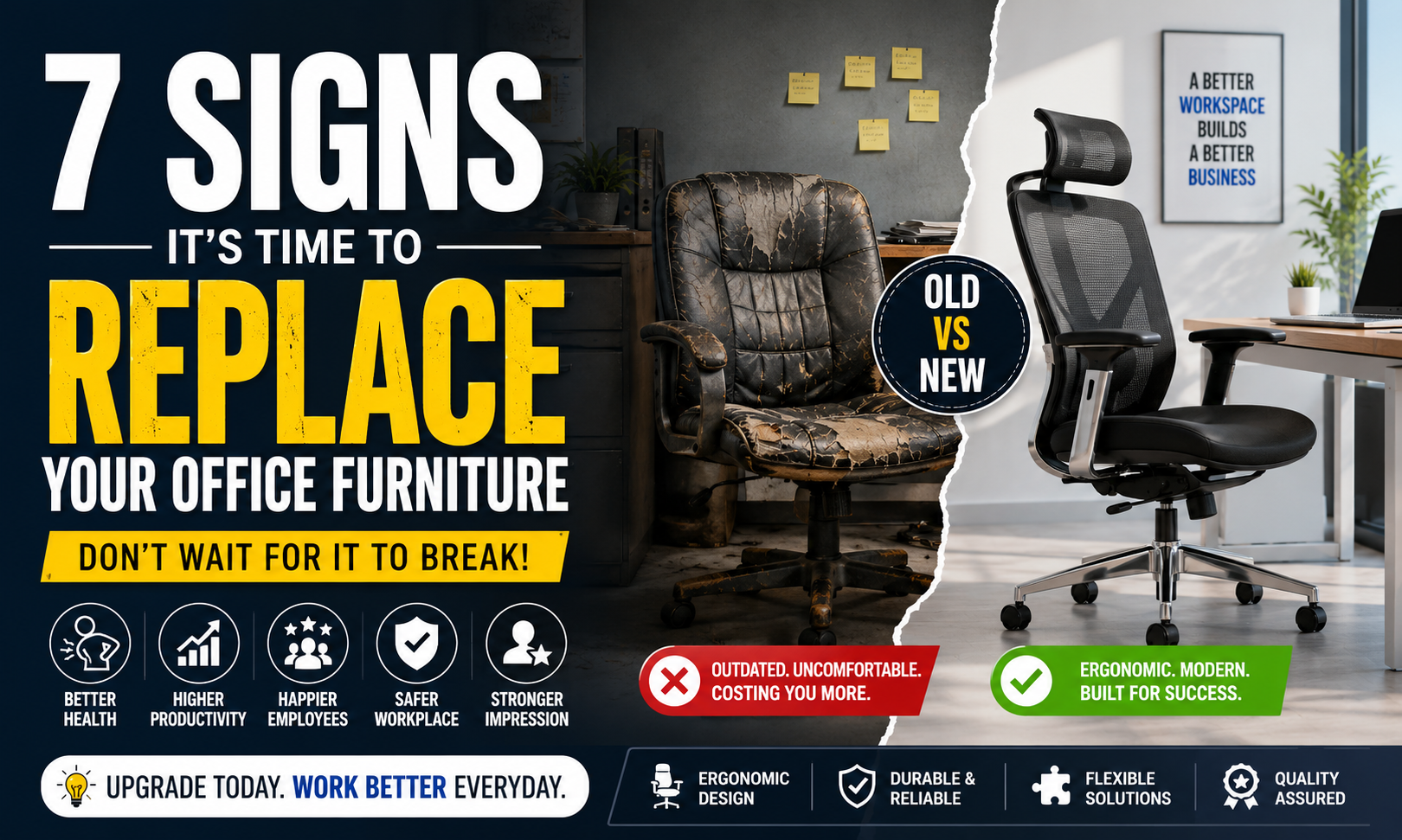
Peeling leather, torn mesh, wobbly legs, scratched desktops, faded upholstery these things don’t just look bad; they feel bad. When clients walk into your office and see worn-out furniture, it creates a subconscious impression about the quality of your work.
And it’s not just about clients. Employees form opinions about their workplace too. A well-designed, well-maintained office tells your team: “We care about you and where you work.” Beat-up furniture sends the opposite message.
Ask yourself: Would you be comfortable taking an important client meeting in your current office setup?
If the answer is no, it’s time.
3. The Furniture No Longer Fits How You Work
Offices evolve. The way your team worked 5 years ago is probably very different from how they work today.
Maybe you’ve shifted to a hybrid model. Maybe your team has grown from 10 people to 40. Maybe you’ve started doing more video calls and need acoustic solutions. Or perhaps you’ve moved from cubicles to a more open, collaborative layout.
Old furniture that was designed for a different way of working simply won’t support the way you work now. A row of fixed desks doesn’t work well for a hybrid team. Old single-person workstations don’t support modern collaborative work cultures.
Signs your furniture no longer fits your workflow:
- Desks are too small for current equipment (dual monitors, docking stations, etc.).
- No privacy solutions for calls or focused work.
- Layout feels cramped or inefficient.
- No flexibility for rearranging or reconfiguring.
4. Repair Costs Are Adding Up
That one chair that keeps getting fixed. The desk that needed a replacement hinge. The wobbly workstation that someone has temporarily fixed with a stack of paper.
When you start spending money repeatedly repairing the same pieces, you’re essentially throwing money away. Repair costs for aging furniture can quietly add up to 30–50% of the cost of simply replacing the item without the benefit of actually having a new, functional piece.
A simple rule of thumb: If the repair cost of a furniture item is more than 40–50% of its replacement cost, replace it.
You’ll save money in the long run, and your team will thank you for it.
5. Your Office Has Grown, But the Furniture Hasn’t
Growth is exciting, but it also creates real pressure on your existing setup. More employees mean more chairs, more desks, more storage. When a business grows quickly, furniture often gets stretched beyond its intended capacity. People start sharing desks, chairs get borrowed from empty rooms, and the general layout begins to feel chaotic.
This is the perfect time to reassess your entire setup, not just add a few extra chairs as a patch fix. A proper furniture upgrade during a growth phase helps you plan smarter, use space better, and set a foundation for the next stage of your business.
What to consider:
- Modular workstations that can be expanded as your team grows.
- Stackable or foldable training room chairs for flexible meeting setups.
- Meeting pods to create private collaboration zones without building new walls.
6. The Furniture Is Creating Safety Concerns
This one is non-negotiable.
A chair with a cracked base. A desk with a sharp exposed edge. A wobbly shelf that could tip over. Loose cables running under unstable furniture. These aren’t minor inconveniences; they’re genuine safety hazards.
In an office environment, furniture-related injuries are more common than people think. A chair that suddenly collapses or a desk that tips over can cause serious harm. Beyond the personal impact, it creates legal and liability risks for your business.
If any furniture in your office has structural damage, it needs to go immediately. No exceptions.
7. It’s Been More Than 7–10 Years
Sometimes there’s no dramatic sign. The furniture just… ages.
Even if nothing is visibly broken, furniture that’s been in use for 7–10 years has likely crossed the threshold of optimal performance. The ergonomic support has degraded. The materials have worn down. The design is outdated.
And here’s something most people don’t realize: older office furniture is often less ergonomic by design, because ergonomic standards have improved significantly in the last decade. What was considered a “good office chair” in 2015 doesn’t hold up to what’s available today.
A planned replacement cycle rather than waiting for things to break is the smarter, more cost-effective approach.
Read Also:
- 5 Best Ergonomic Mesh Office Chairs for Long Working Hours
- Why Every Startup Should Invest in Ergonomic Chairs
- Common Mistakes to Avoid When Buying a Lounge Chair Online
What to Do When You Decide to Replace Your Office Furniture
Once you’ve decided it’s time for an upgrade, don’t just buy the first thing you see. Take a moment to plan properly; it’ll save you time, money, and another premature replacement.
Here’s a quick checklist:
- Assess your actual needs: How many people are you buying for? What are their primary tasks? Are there any specific ergonomic needs (tall employees, people with existing back issues, etc.)?
- Prioritize ergonomics over aesthetics: A beautiful chair that’s uncomfortable is a bad investment. Focus on adjustability, lumbar support, breathability, and build quality first, then factor in looks.
- Think long-term: Buy furniture that will serve you for the next 5–8 years, not just what looks good today. Consider how your team might grow or how your workspace might change.
- Don’t ignore the workspace as a whole: Replacing just chairs while keeping old desks (or vice versa) often creates mismatched ergonomic problems. Try to upgrade the complete setup together when possible.
- Buy from a reliable supplier who offers support: Post-sale support matters especially for bulk orders. Make sure your furniture partner can handle delivery, installation, and any warranty concerns.
Final Thoughts
Office furniture is not just a cost; it’s an investment in your people and your business. The right furniture boosts productivity, reduces health issues, and creates a workspace that employees actually want to come to.
If you’re noticing even two or three of the signs we’ve listed above, it’s worth having a serious conversation about an upgrade. Don’t wait for a chair to completely break or an employee to file a health complaint.
At Aadinath Furniture, we’ve been helping businesses across Delhi NCR, Gurgaon, Noida, and PAN India upgrade their office setups for over 15 years.
Whether you need ergonomic office chairs, executive desks, modular workstations, or complete office fit-outs, we have everything under one roof.